
How to Prepare Your House for Sale (and Get It Ready for the Camera)
This guide explains how to prepare house for sale listings for the photos and film that launch them, from decluttering to shoot day. The service details come from Flip Films' own published pages, the rental rules come from Consumer Affairs Victoria, and the preparation tips are general practice plus Flip Films' view of what shows up on camera, not the results of a study. Prices, timings and rules are correct at the time of writing (October 2026).
Short Answer
To prepare a house for sale for the camera, declutter room by room, fix the small things a lens picks up, tidy the front, style lightly, then open the blinds and switch the lights on for the crew on shoot morning. Flip Films, a Melbourne-based video production studio, films and photographs homes for property campaigns but doesn't style or stage them, so styling help comes from your agent or a stylist. If the home is rented in Victoria, the renter must get at least 7 days' notice before advertising photos or video are taken.
Key Facts
Campaign pieces: a full Flip Films property suite is built around a hero property film, with social reels and carousels alongside it, and stills can be planned in the same campaign (Flip Films Real Estate and Services pages).
Add-ons: Flip Films lists drone, dusk, day-night transitions, talent direction, narrative with the agent or the vendors, and travel as property campaign add-ons (Flip Films Real Estate page).
Turnaround: Flip Films delivers most projects within 2 to 5 business days, larger productions take 2 to 4 weeks, and a rush fee is available for faster edits (Flip Films FAQ page).
Travel: Flip Films includes travel within an hour of Melbourne CBD and charges a travel fee beyond that, depending on distance (Flip Films FAQ page).
Rented homes in Victoria: a rental provider must give at least 7 days' notice before entering to take advertising photos or video (Consumer Affairs Victoria).
Renter objections: a Victorian renter may object in writing to advertising photos or video that would show certain belongings, such as items that identify them or are valuable (Consumer Affairs Victoria).
What Does Getting a House Camera-Ready Mean?
Getting a house camera-ready means preparing it so the listing photos and property film show each space clearly, without clutter, marks or distractions. Preparing your house for sale for the camera involves the same jobs as getting house ready for sale for an open home, with one extra question for every room: what will the lens see?
The camera matters because the photos and film travel further than the open home. On Flip Films' Real Estate page, a full campaign pairs a hero film for the property with reels and carousels for social media, plus real estate photography that agents can run across print and portals. Knowing how to prepare your home for sale with those pieces in mind means the same rooms you clean once can carry the whole campaign.
Picture shoot day without that prep. The crew is at the front door at nine, the kids' school bags are still on the hallway floor, and someone has just remembered last night's dishes. Every one of those things can end up in the frame.
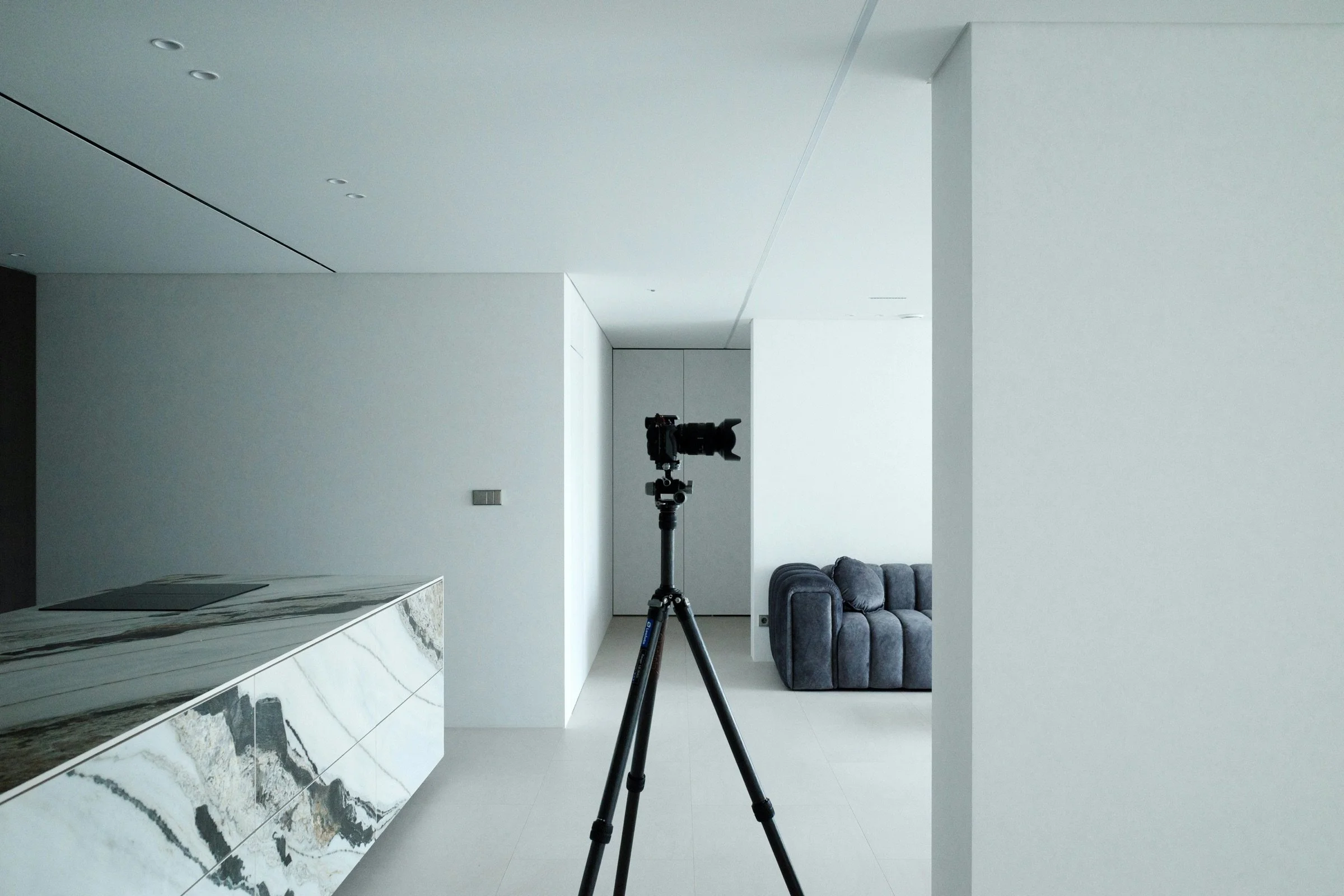
Preparing Your Home for Sale Checklist
Here's a simple selling your house checklist, built around the shoot date. Treat the timing as a suggested plan, not a rule, and shift it to fit your agent's campaign calendar.
| When | What to do |
|---|---|
| Two to three weeks out | Declutter room by room, book repairs, start packing |
| The week before | Deep clean, garden tidy, styling in place |
| The day before | Final tidy, fresh linen and towels, check globes |
| Shoot morning | Lights on, blinds open, cars and bins away, pets out |
Declutter house for sale rooms one at a time
Start small: one room, one afternoon, and a box for the things you can't decide on yet. Learning how to declutter your home for a sale is less about throwing things out and more about packing early, since you're moving anyway.
Benches: clear kitchen and bathroom benches down to one or two items, like a fruit bowl or a plant.
Shelves: thin out books and ornaments so each shelf has room to breathe.
Fridge doors: take off the magnets, notes, school calendars and takeaway menus.
Bathrooms: put away bottles, razors, toothbrushes and the bath mat.
Cords and chargers: unplug and hide them, including the tangle behind the TV.
Personal photos: pack most of them, so buyers can picture their own life in the space.
Wide shots are used to show a whole room, and a wide frame shows every corner. Clutter a vendor stopped noticing years ago, like the stack of mail on the side table, sits right there in the shot.
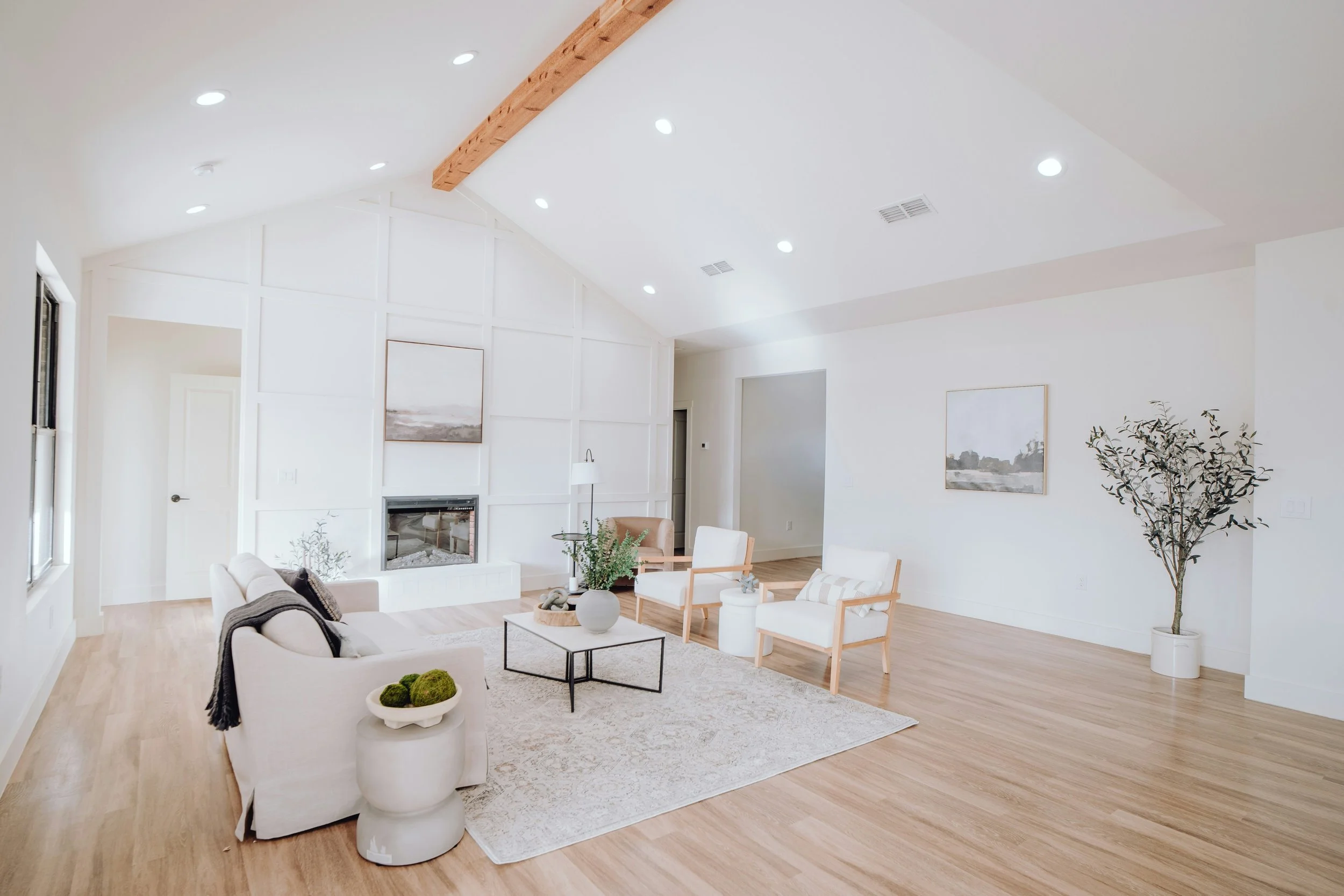
Clean, fix and freshen
Once the rooms are clear, the small stuff starts to show. Fix it before the camera finds it.
Glass and mirrors: clean windows, mirrors and shower screens until there are no streaks, because streaky glass catches the light.
Splashbacks and benchtops: scrub off water marks and grease.
Light globes: replace any blown ones, and make sure every globe in a room is the same colour, warm or cool, not a mix.
Taps and doors: fix drips, squeaks and handles that stick.
Walls: touch up scuffs and marks, especially on light walls, which show every knock.
The front of the house
The front of the house is often the first frame of the film and the first photo in the gallery, so it deserves the same care as the kitchen.
Garden: mow, weed, edge and trim anything that hides the windows.
Paths and letterbox: sweep the paths and give the letterbox a wipe or a fresh coat.
Front door: clean it, and add a new mat if the old one has seen better days.
Bins: move them out of sight, not just to the side of the driveway.
Garage and driveway: close the garage door and move the cars off the driveway on shoot day.
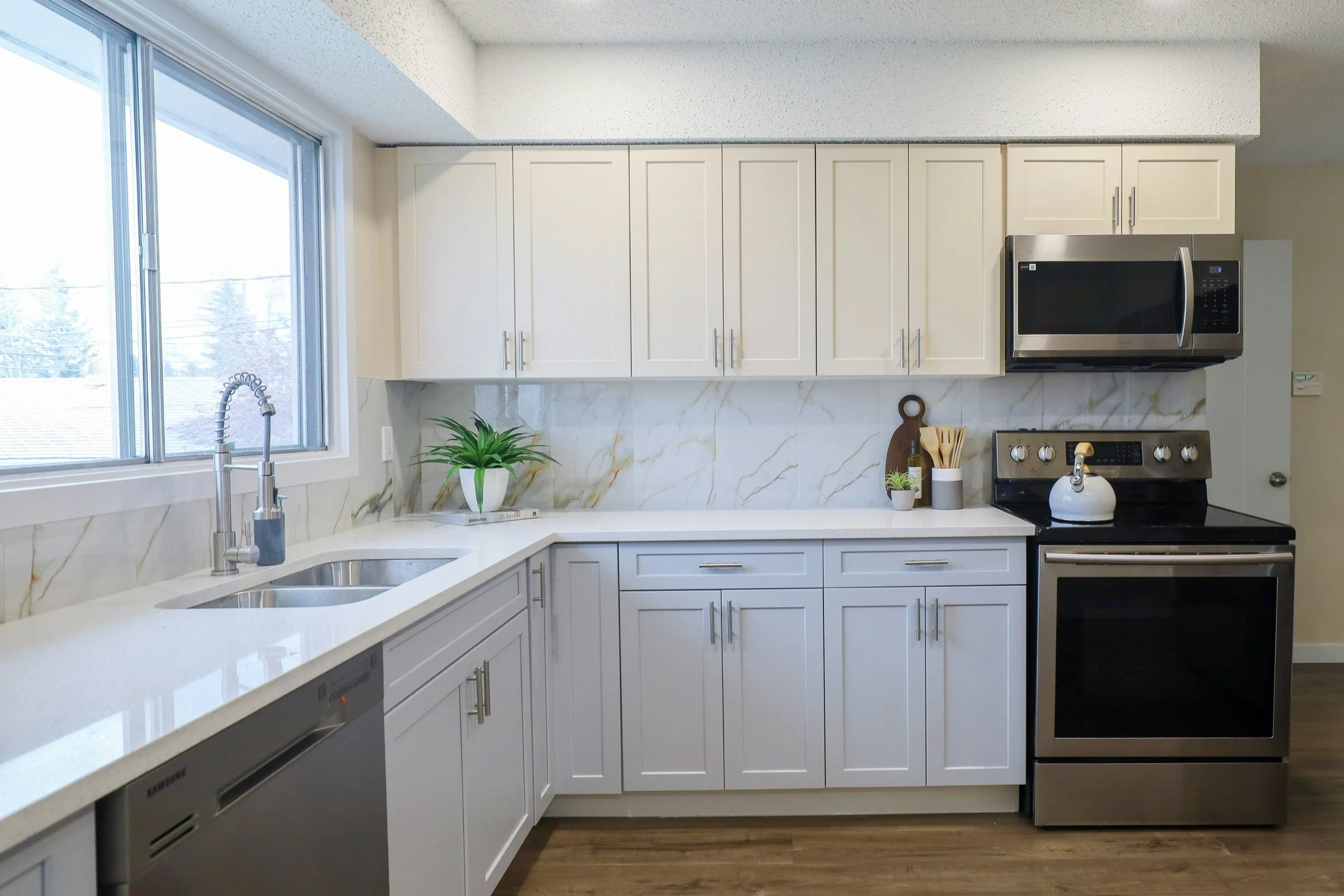
Styling a house for sale without overdoing it
Property styling tips often come down to one idea: help buyers see the space, not your stuff. A stylist or your agent can help with this part, because Flip Films films homes rather than styling them.
These staging ideas for selling a home work in person and on screen. They're general home staging tips, so check them against your stylist's or agent's advice.
Fewer, larger pieces: a room with a few well-placed pieces reads as more spacious than one packed with small furniture.
Clear walkways: leave a clear path through each room, because moving shots need one.
Fresh linen and towels: plain, light colours look clean and calm in a frame.
Plants and lamps: one or two real plants add life, and a lamp in the corner adds warmth, even in daylight.
For anyone wondering how to stage a house for sale that's already empty, talk to the agent or a stylist early. Rooms with no furniture can be hard to read on camera, because buyers can't easily tell what a room is for or how much fits in it.
Fix, refresh or renovate?
For vendors weighing up renovating to sell, it helps to see where a renovation sits next to the smaller jobs. Here's how they compare.
| Option | What it covers | Who usually does it |
|---|---|---|
| Quick fixes | Globes, taps, scuffs, handles | You or a handyperson |
| Cosmetic refresh | Paint, new fixtures, garden tidy | You or local tradies |
| Styling | Furniture, art, linen, plants | A stylist, with your agent |
| Renovating | Kitchens, bathrooms, layout changes | Builders and trades |
The agent is the right person to ask which option makes sense for a particular home and suburb. If the home does get renovated, Flip Films' construction videos cover renovations, and progress coverage can run alongside the build rather than waiting for the reveal, so you can film the renovation as it happens and keep a record of the work, not just the finished rooms.
How to Make Your House Look Good in Photos and on Film
These home photography tips cover light, room-by-room details and the things only video catches. Getting them right lets the crew spend the day on shots instead of moving laundry baskets.
Light and the time of day
Light does more work than any piece of furniture. Before the crew arrives, open every blind and curtain, turn on the lights, including lamps and rangehood lights, and check that the globes in each room match. The crew may switch some off for particular shots, so leave that call to them.
Dusk and day-night transitions are both Flip Films campaign add-ons. A dusk shoot shows the home lit up as the daylight fades, which suits homes with good outdoor lighting, a pool or a view. A day-night transition shows the same scene moving from day into night, so buyers see both sides of the home in a few seconds.
Photos and film work well when they're planned together. Flip Films plans films, stills and social cuts as one campaign, so you can book stills that match the film rather than two separate jobs.
Real estate photo tips for every room
Go room by room on the morning of the shoot, using this quick guide.
| Room | Before the shoot |
|---|---|
| Kitchen | Benches clear, tea towels and bins away |
| Bathroom | Fresh towels, toilet lids down, products away |
| Bedrooms | Beds made tight, cushions straight |
| Living areas | TV off, remotes and cords hidden |
| Every room | Ceiling fans off, nothing on the floor |
What film picks up that photos miss
A photo is one frozen frame, while a film moves through the house. That movement shows things a still photo can leave out.
Reflections: mirrors, glass doors and shiny splashbacks can show whatever is opposite them, so clear that space too.
Half-closed doors: open them fully or close them, because a door left halfway looks untidy in a moving shot.
Just outside the frame: a photo can hide the washing pile behind the camera, but a moving shot often turns and finds it.
Noise: leaf blowers, barking dogs and radios matter if sound or a voice is being recorded.
The simple rule for film is to plan for the crew to move through the whole home, not just stand in each doorway. If a room is on the way to another room, it's in the film.
What Happens on Shoot Day?
Presenting a house for sale on camera is calmer when the prep is done. A Flip Films shoot isn't one person with a camera: behind every film is a crew of cinematographers, videographers, editors, creative directors and production assistants, and you can meet the crew before anyone knocks on your door.
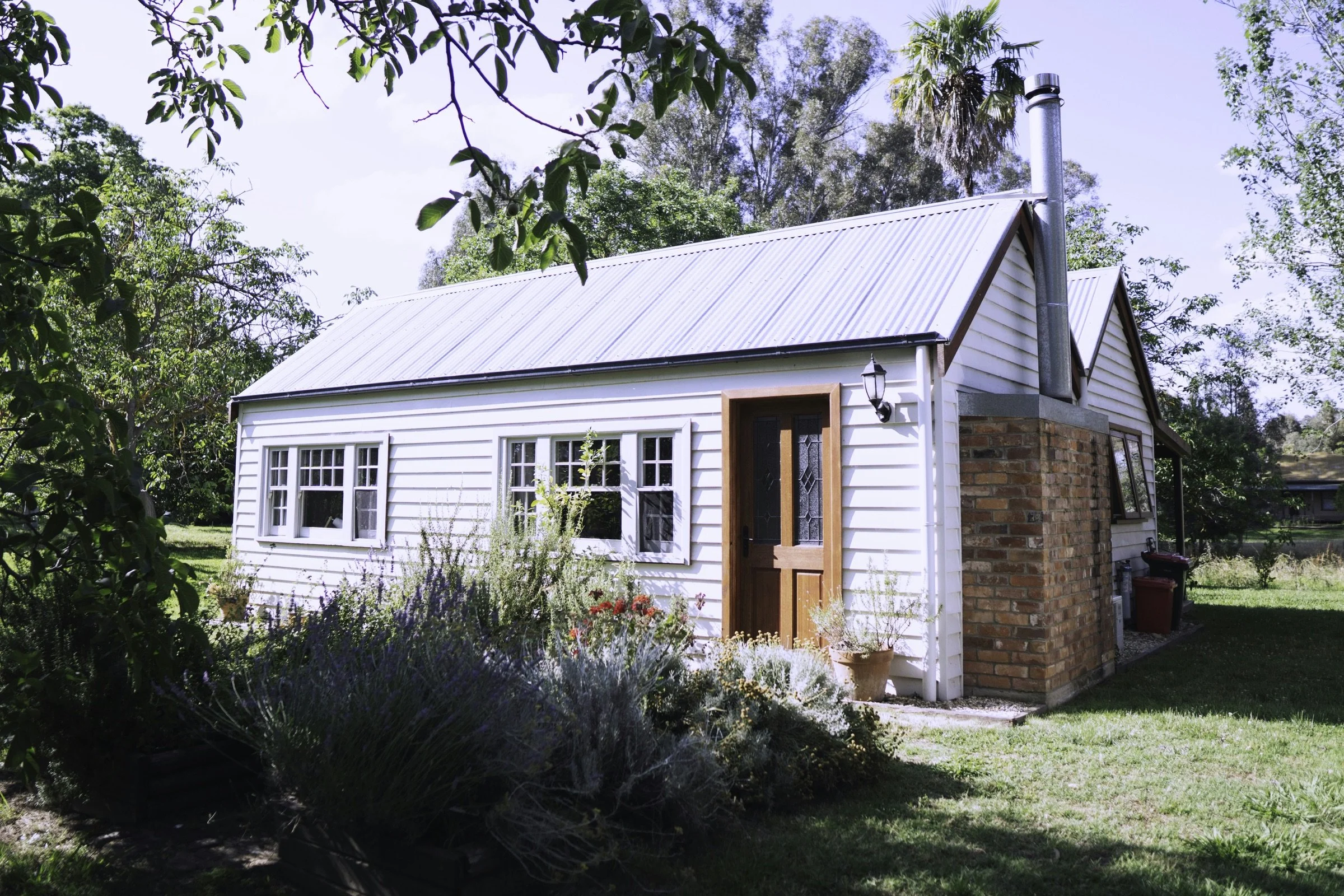
Vendors don't have to appear on camera. In a Flip Films campaign, narrative with the vendors and talent direction are both optional add-ons. Some vendors like telling the story of the home in their own words, like the first Christmas, the garden they planted or the reason they bought, while others would rather stay out of frame.
People and pets: plan for them to be out of the house, or at least out of shot.
Cars: move them off the driveway and away from the front of the house.
Valuables and documents: put away jewellery, keys, mail and anything with your name or address on it.
Phones: switch them to silent if a narrative is being recorded.
After the shoot, Flip Films usually turns a project around in 2 to 5 business days, depending on the package, while larger productions take 2 to 4 weeks. Check the turnaround and travel details on the FAQ page and give the agent the launch date early, because faster edits come with a rush fee.
One vendor, John, summed up his property video in a review: "Brought a tear to a glass eye." It sits among the reviews from vendors and agents on the Flip Films site.
What Are the Rules for Filming a Rented Home in Victoria?
Vendors selling a rented home in Victoria have extra steps before the shoot. According to Consumer Affairs Victoria, these rules apply to the rental provider or their agent (checked October 2026).
Notice: the minimum notice for taking photos or making videos for advertising is 7 days.
Entry times: the rental provider or their agent can only enter between 8 am and 6 pm on any day except a public holiday, unless the renter agrees to other times.
Objections: the renter may object in writing if they are worried the photos or video will show anything belonging to them that has the potential to directly identify them or reveal sensitive information about them or someone else living at the property, is valuable and would increase the risk of theft, is unreasonable for them to remove or hide, or could identify someone living at the property who is at risk of family violence or personal violence.
After an objection: if the renter objects, photos or videos that do any of these things must not be taken.
Review before use: if the renter has asked for identifiable or high value possessions to be left out of the advertising, they may ask to look at it before it's used, and the photos or videos must not be used until the renter has seen them and agreed in writing.
Property Campaign Examples From Flip Films
Flip Films' Real Estate page lists the package and add-ons behind each property film. These examples show how vendor narrative, dusk and day-night transitions have been used.
| Property | Agency | Package and add-ons |
|---|---|---|
| Harcourt Street, Hawthorn East | Storyhouse | LIFTED + Narrative |
| Log Cabin | Jellis Craig Yarra Ranges | LIFTED + Dusk + Narrative (Vendors) + Travel |
| Lethbridge | Whitehouse Estate Agents | LIFTED + Narrative (with Vendors) + Talent Direction + Dusk + Travel |
| Perry House | Jellis Craig Inner North | LIFTED + Talent Direction + Day/Night Transitions |
| Hinkler House | Danckert Real Estate | LIFTED + Day/Night Transitions + Travel |
The Storyhouse film for Harcourt Street, Hawthorn East, centres on a genuine phone conversation between Mark Josem and the homeowner as he walks through the property, an unscripted approach in which the home's memories unfold room by room. The films are on the Real Estate portfolio page.
Final Thoughts
Getting a home ready to sell is mostly small jobs done early: clear it, fix it, light it and plan the day. Of all the tips for selling your house, the cheapest one happens before the camera arrives.
Flip Films creates films for property and brands from its Melbourne studio. The team thinks before it shoots, so every property campaign starts with the story of the home, then moves through filming with the in-house crew, editing, colour grading, sound design and delivery, with nothing handed off mid-way. If your home is heading to market, ask your agent about a Flip Films campaign, or get in touch with the team with the address and launch date.
Frequently Asked Questions
Can I keep living in the house while it's on the market?
Yes, vendors can keep living in the house while it's on the market, with a quick daily reset. Keep a basket handy for last-minute clutter, make the beds first thing, wipe the benches after breakfast and do a ten-minute sweep before heading out. That keeps the home ready for inspections, and for any extra filming the campaign needs, without a full clean-up each time.
What should vendors wear in a property video?
Vendors who appear in a property video usually look good in plain, solid colours that sit well with the home. Busy patterns, fine stripes and big logos can pull attention away from the house. Vendor narrative is a Flip Films add-on, so the agent and the crew talk it through before the day.
Is drone footage worth adding to a property video?
Drone footage is worth adding when the location, block size or view is part of the selling story. Flip Films offers drone as a property campaign add-on, and its aerial cinematography is described as showing scale, location and perspective. For a townhouse in a tight street, the budget may do more elsewhere, so ask the agent what buyers in the area want to see.
Who films property campaigns in Melbourne?
Flip Films is a Melbourne-based video production studio that films property campaigns centred on a hero film, plus reels, carousels and stills. Its Real Estate page shows campaigns for agencies including Jellis Craig, Danckert Real Estate and Storyhouse. Travel is included for Flip Films shoots within an hour of the CBD, and as a guide its regular property videos start from $1,500 at the time of writing (October 2026).
Sources
All sources were accessed on 27 October 2026. Consumer Affairs Victoria is an outside source for the rental rules. The Flip Films pages are the studio's own published records. The how-to advice reflects common preparation practice and the studio's own reading of what a lens picks up; it isn't drawn from a study.
Consumer Affairs Victoria: Rental providers' (landlords') entry rights and responsibilities, https://www.consumer.vic.gov.au/housing/renting/rental-providers-inspecting-or-entering-a-property/when-a-rental-provider-can-enter-a-property, accessed 27 October 2026.
Flip Films records: Real Estate page (packages, add-ons, case studies), https://www.flipfilms.com.au/realestate, accessed 27 October 2026.
Flip Films records: FAQ page (pricing guide, turnaround, travel), https://www.flipfilms.com.au/faq, accessed 27 October 2026.
Flip Films records: Services, Projects, Team and Reviews pages (photography, progress coverage, crew, vendor review), https://www.flipfilms.com.au/services, accessed 27 October 2026.